Writing a research paper in high school is often your first real introduction to academic writing — and while it can feel intimidating, the process becomes much easier when broken into steps. This expanded guide explains every stage in depth, helping you not only complete your paper but also understand why each step matters.
1. What Is a Research Paper? (Fully Explained)
A research paper is a formal academic essay where you investigate a topic, analyze information, and present your findings through a clear argument supported by evidence.

A research paper requires you to:
- Ask a thoughtful question about a topic
- Search for credible information from reliable sources
- Analyze and interpret that information
- Connect ideas logically
- Write clearly, with academic tone
- Cite your sources properly
A research paper is not:
- A summary
- An opinion piece
- A personal story (unless it’s part of a reflection assignment)
- A collection of facts without analysis
High school research papers usually range from 3 to 10 pages, depending on grade level, class, and assignment requirements.

2. Understand Your Assignment (Completely)
This step is often overlooked, but it is the most important. If you misunderstand the assignment, the entire paper can go off track.
Carefully check the following:
A. Type of Paper
Is it:
- Argumentative? (You defend a claim)
- Analytical? (You break down a topic into parts)
- Informative? (You explain a topic)
- Comparative? (You compare two ideas/texts)
- Historical? (You examine past events)
Each type has a different structure.
B. Required Length
Is it:
- 2–3 pages?
- 5 pages?
- 8–10 pages?
This affects how narrow or broad your topic should be.
C. Required Sources
Your teacher may require:
- primary sources
- secondary sources
- scholarly articles
- books
- websites from reliable institutions
D. Citation Format
Which one do you need?
- MLA (most common in English)
- APA (common in science/social science)
- Chicago/Turabian (common in history)
E. Format or Structure Requirements
Your teacher may require:
- an outline
- notecards
- rough drafts
- peer editing
- annotated bibliography
- title page
F. Deadlines
Break them down:
- Topic proposal
- Working bibliography
- Outline
- Rough draft
- Final draft
Tip: Create a calendar with mini-deadlines to avoid last-minute stress.
3. Choose a Strong Topic (Deeply Detailed)

A good topic is the foundation of a good paper.
A. Characteristics of a good research topic
Your topic should be:
✔ Interesting to you
You will spend hours researching it. If you choose something dull, you’ll struggle.
✔ Not too broad
Too broad: “Climate change”
Better: “How climate change affects coral reefs in the Pacific Ocean”
✔ Not too narrow
Too narrow: “The temperature change of a coral reef on July 12, 2018”
Better: “How rising ocean temperatures affect coral bleaching”
✔ Researchable
Make sure reliable sources exist.
✔ Appropriate for your class
A topic in English class may require literary analysis, while a science paper needs data or studies.
4. Conduct Preliminary Research (In-Depth)
Before finalizing your topic, do background research to make sure enough information exists.
How to do this effectively:

A. Start with general sources:
- Google (but only for basic knowledge)
- Wikipedia (for overview only)
- Britannica
- History.com
- National Geographic
Do not cite these; use them to understand the topic better.
B. Identify keywords for later research
Example topic: “How video games affect teen mental health”
Keywords:
- “video games psychological impact”
- “gaming and adolescents”
- “teen mental health studies”
- “screen time anxiety research”
Keywords help you find stronger academic sources later.
C. Determine if the topic is too broad or narrow
If you find:
- thousands of articles → too broad
- almost none → too narrow
Adjust accordingly.
5. Develop a Strong Research Question (Fully Expanded)
Your research question gives your paper a clear direction.
A strong research question:
- is specific
- has depth
- cannot be answered with “yes” or “no”
- encourages investigation
- matches your assignment type
Examples of strong vs. weak research questions
Weak: “Is pollution bad?”
Strong: “How does air pollution in major industrial cities contribute to increased respiratory illnesses among children?”
Weak: “Do video games affect teens?”
Strong: “How do competitive online video games influence stress and anxiety levels in high school students?”
6. Create a Thesis Statement (Extensively Detailed)
Your thesis is the backbone of your paper. It should:
- answer your research question
- take a stance
- be specific
- be debatable
- preview your argument/points
Formula for writing a strong thesis:
Although (counterargument), (main argument) because (reason 1), (reason 2), and (reason 3).
Example:
“Although many argue that video games harm teenagers, research shows that moderate gaming improves cognitive skills, strengthens social relationships, and helps reduce stress.”
Another example:
“Climate change threatens global food security because rising temperatures reduce crop yields, increase pest populations, and intensify extreme weather events.”
7. Gather Reliable Sources (More Detailed Guidance)
Your research must come from credible sources—not random websites.
A. Use your school library
Librarians are trained to help you find quality sources. They can provide access to:
- databases
- academic journals
- reference books
B. Use academic databases
Examples:
- JSTOR
- EBSCOhost
- ProQuest
- Gale In Context
- Google Scholar
C. Evaluate websites using the C.R.A.A.P. test
Ask:
- Currency: Is it up to date?
- Relevance: Does it directly support my topic?
- Authority: Is the author credible?
- Accuracy: Does it cite evidence?
- Purpose: Is it informative, or does it try to sell something?
D. Types of sources to include
- Primary sources: letters, interviews, speeches, photos, original documents
- Secondary sources: books, scholarly articles, reviews, analyses
8. Take Organized Notes (Fully Elaborated)
Disorganized notes lead to a disorganized paper. Use a method that works for you.
A. Use digital tools
- Google Docs
- Notion
- OneNote
- Scrivener
B. Create separate sections
Organize notes by:
- topic
- argument
- source
- subtopic
- chapter
C. Always record citation information immediately
This saves hours later.
Record:
- author
- title
- publisher
- date
- page numbers
- URL
D. Label your notes
- Direct quote: copy verbatim (with quotation marks and page #)
- Paraphrase: rewrite in your own words
- Summary: condense main ideas
- Reflection: your original thoughts
This prevents plagiarism.
9. Create a Detailed Outline (Fully Expanded)
A thorough outline ensures your paper flows logically and covers everything.
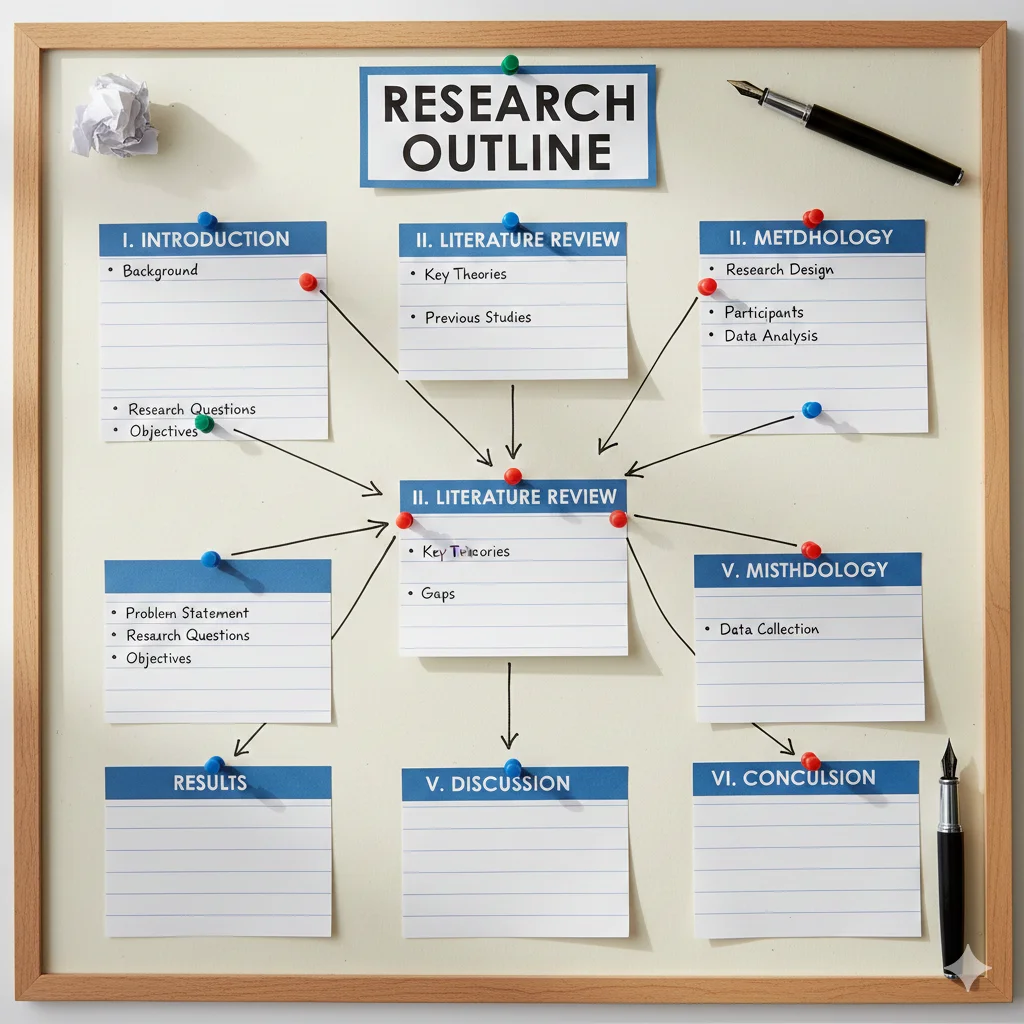
Sample Detailed Outline
I. Introduction
- Hook
- Background information
- Overview of main issues
- Thesis statement
II. Background / Context (Optional but helpful)
- Define key terms
- Historical background
- Why the topic matters
III. Body Paragraph 1 – First Main Point
- Topic sentence
- Evidence from Source 1
- Explanation
- Evidence from Source 2
- Example or case study
- Mini-conclusion
IV. Body Paragraph 2 – Second Main Point
- Topic sentence
- Evidence from strong academic source
- Explanation
- Comparison or contrast
- Transition
V. Body Paragraph 3 – Third Main Point
- Topic sentence
- Quote or paraphrase
- Explanation
- Example
- Connection to thesis
VI. Counterargument & Rebuttal
- Present opposing view
- Use evidence to refute it
- Explain why your viewpoint is stronger
VII. Conclusion
- Restate thesis in new words
- Summarize points
- Explain broader significance
- Suggest solutions or next steps
- End with a strong closing statement
10. Write the First Draft (Expanded Writing Advice)
A. Introduction Tips

A strong introduction:
- grabs attention
- sets context
- explains the topic’s importance
- presents the thesis clearly
Strong hooks:
- a surprising fact
- a short story
- a thought-provoking question
- a historical anecdote
- a meaningful quote
Example introduction (short):
“Every year, over 4,000 people die from air pollution in major U.S. cities — yet the true cost of toxic air is often overlooked. This research paper examines how industrial pollution disproportionately affects children living in urban neighborhoods. By analyzing recent health studies, government data, and environmental reports, this paper argues that stricter federal regulations are necessary to protect vulnerable populations.”
B. Body Paragraph Advice
Your body paragraphs should:
- follow a logical order
- begin with strong topic sentences
- use evidence strategically
- explain how evidence supports your thesis
Use the T.E.E.A. Method
- Topic sentence
- Evidence
- Explanation
- Analysis
Avoid common mistakes:
- listing facts
- dropping quotes without explanation (“quote dumping”)
- using emotional arguments
- switching topics mid-paragraph
C. Counterargument Section
Including a counterargument shows maturity and strengthens your credibility.
Steps:
- Identify the opposing viewpoint
- Explain it fairly
- Refute it with evidence
- Show why your argument is stronger
Example:
“Some argue that social media helps teens stay connected. While this is partially true, mental health studies show that constant online comparison leads to increased anxiety, depression, and fear of missing out.”
D. Conclusion Tips
A strong conclusion should:
- restate thesis in new words
- connect major points
- show why your argument matters
- leave the reader thinking
- avoid introducing new evidence
Effective techniques:
- connect to hook
- call to action
- suggest future research
- connect topic to larger issues
11. Cite Your Sources Properly (More Details)
Why citations matter
- prevent plagiarism
- show academic honesty
- strengthen credibility
- allow readers to verify information
Two types of citations:
- In-text citations
- Bibliography/Works Cited/References page
MLA In-text Example:
(Smith 45)
APA In-text Example:
(Smith, 2021, p. 45)
Chicago Note Example:
¹John Smith, History of Environmental Policy, 45.
Use free tools:
- EasyBib
- Zotero
- Purdue OWL
- Citation Machine
Always double-check formatting accuracy.
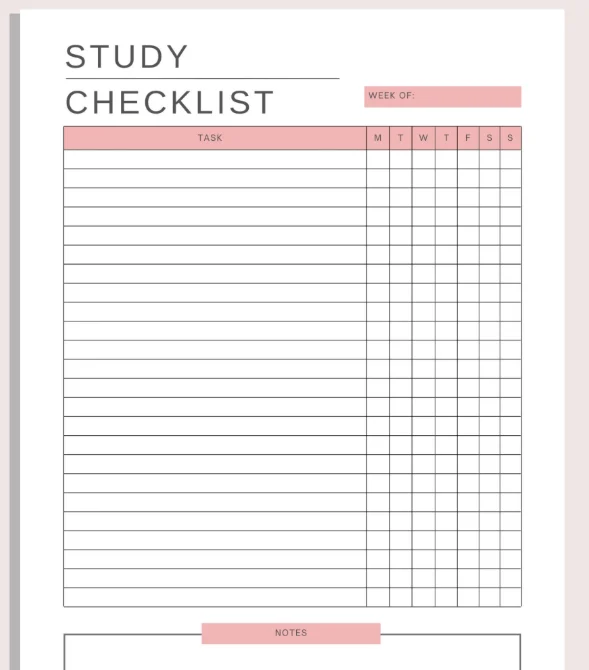
12. Revise Your Paper (In-Depth Revision Checklist)
Revision focuses on content, not grammar.
Ask yourself:
A. Argument Quality
- Is my thesis strong and clear?
- Do all paragraphs support the thesis?
- Is my analysis deep enough?
B. Structure and Organization
- Do ideas flow logically?
- Do paragraphs have strong transitions?
- Is there any repetition?
C. Evidence Quality
- Are my sources credible?
- Did I explain every quote?
- Is any evidence irrelevant?
D. Clarity
- Are my points easy to understand?
- Are sentences too long or confusing?
Consider reading your paper aloud — it reveals unclear writing immediately.
13. Proofread Carefully (Detailed Tips)
Now check for surface errors:
Look for:
- typos
- missing words
- grammar errors
- awkward phrasing
- repeated words
- incorrect punctuation
Tools that help:
- Grammarly
- ProWritingAid
- Spell check
- Reading aloud
- Printing the paper to mark errors
Ask someone to review:
- teacher
- peer
- family member
Fresh eyes catch what you missed.
14. Format Your Paper Correctly (Expanded Guidance)
Most teachers require specific formatting.
Standard high school formatting:
- 12-point Times New Roman
- Double-spaced
- 1-inch margins
- Page numbers in upper right
- Proper heading (MLA: name, teacher, class, date)
- Proper title formatting
For MLA:
- Works Cited page
- Hanging indent
For APA:
- Title page
- Running header
- References page
For Chicago:
- Title page
- Footnotes
- Bibliography
Careful formatting shows professionalism.
15. Submit Your Final Draft (Final Checks)
Before turning it in, ensure:
✔ Every required section is included
✔ Formatting matches teacher guidelines
✔ All citations are correct
✔ File is labeled properly
✔ You submitted the correct version
✔ You met the deadline
Final Tips for Success (Expanded)
⭐ Start early
Rushed papers look rushed.
⭐ Break the task into mini-steps
It reduces stress and improves quality.
⭐ Aim for clarity, not fancy vocabulary
Teachers prefer clearly explained ideas over complicated wording.
⭐ Use variety in your evidence
Books, articles, studies, expert opinions.
⭐ Ask for help
Teachers want to help you succeed.